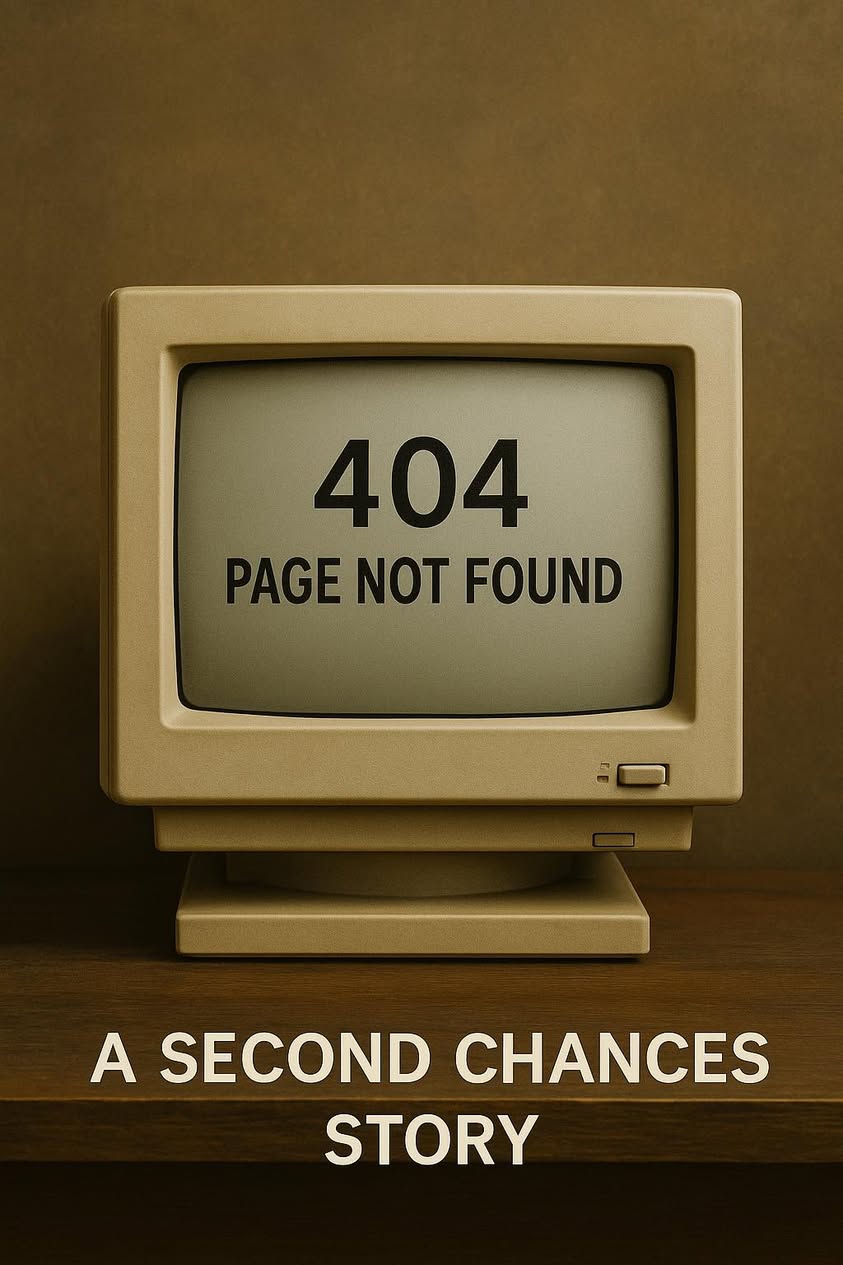
Life rarely grants do-overs, but sometimes it does.
(Note: there are some technical terms that you may not be familiar with. If you run into one that you don’t know/understand, scroll down to the glossary.)
Mara didn’t set out to become a rescuer of digital ghosts.
It started in her late twenties, during a long, low season she only later understood as a depressive collapse. She’d lost her job. Stopped answering texts. Lived on crackers and instant noodles. Therapy helped—but gently, cautiously.
Her therapist suggested journaling. Mara smiled politely, knowing it wouldn’t happen. Not after what she’d posted online once, back when it still felt safe to leave parts of yourself scattered across blog rings and bare-bones forums.
But one evening, just to prove it to herself, she typed a phrase into a search bar—something she remembered from a post that had helped her through a night she hadn’t expected to survive.
“The world isn’t kind, but it isn’t done with you yet.”
Nothing came up.
No results.
Page not found.
That phrase, so bland on the surface, shook something loose in her.
So she learned how to look harder.
—
Mara now spent her nights working quietly as part of a loose, half-serious collective called the Patchers. No formal hierarchy, just a chatroom and a rotating cast of archivists, coders, and late-night weirdos with a soft spot for impermanence. They used public tools—crawlers, cache-diggers, RSS scrapers—but their real weapon was stubbornness.
Some of the Patchers had helped rescue massive data losses—public posts from Google+ before the shutdown, Yahoo! Answers before it vanished overnight, even fragments of Myspace music after a botched server migration wiped out twelve years of uploads.
They’d mirrored entire news sites the moment local publishers folded. One volunteer archived a whole town’s digital obituary records the week the paper closed. Someone else preserved deleted tweets from political leaders before their public statements disappeared.
Mara hadn’t been part of those sweeps, but she followed their work like scripture. Not everything lost was valuable—but some of it was. Some of it mattered. You never knew until someone went looking for it.
The official archives—like the Wayback Machine—did their best. But they missed things. Personal things. Deep-cut content that didn’t get linked, indexed, or reposted. A blog without a following. A page with no tags. An entry someone deleted five minutes after posting it.
That was the kind of thing Mara specialized in.
—
One night, around 2:17 a.m., she found it.
A half-broken mirror of a defunct domain—a mental health blog called Borrowed Light. The template was stripped, fonts generic. Sidebar links all dead. But the content was there, in that messy, code-choked frame: thirty-two posts from 2008 to 2011.
She clicked through. The posts were raw. Hand-typed. A woman in her early twenties, using the handle KiraOnTheEdge, chronicling her decline with equal parts rage and self-mockery. But what caught Mara’s eye was one entry dated April 9, 2011. The title had never gone live. It simply read: Before I Go.
The crawler had pulled it by accident—it had been stored in a drafts folder that had briefly been public during a server migration. Pure chance.
—
She opened the file. It wasn’t long.
I’m not trying to be poetic.
I’m tired.
I know what tonight is. Don’t try to talk me out of it—I already had this conversation with myself, and I lost.
But if anyone ever reads this (which they won’t), please know I wasn’t cruel. I just couldn’t hold it anymore.
Tell my little brother… no, never mind. He doesn’t need this.
There was a poem I used to love. It ended with, “Go on living, if you can.”
I hope you can.
–K.
Mara sat back from the monitor, hands trembling.
She didn’t cry—she rarely did—but her throat clenched like it was trying to stop her from breathing too fast. She knew what this was. She’d written something similar, once. Never published it. Just deleted it after the fact, quietly, as if erasing it could un-mean it.
She copied the post. Saved it in triplicate. Uploaded it to a personal backup server. Then she stared at it for two hours, unsure what to do.
—
The next evening, she made a decision.
She rebuilt the site, page by page, in a private sandbox environment. Not just the post—but the entire blog. She cleaned the code, fixed dead links, restored formatting from old CSS mirrors. She anonymized anything that might lead to real-world harm. And at the top of the homepage, she added a note:
This is a reconstruction of a lost blog that once saved lives. It deserves to be read. Not for the tragedy—but for the clarity it offered. One post was never meant to be seen. But it was. And it mattered.
—
Two weeks later, an email came in through the contact form.
Subject: “Found you by accident”
Hi.
I don’t know why I’m writing this. I guess I just… didn’t expect to find that post.
I’m 17. Been having a hard time. Things got pretty bad last week.
Then I read Before I Go. And something in it hit me. Like someone else had already said the thing I couldn’t say.
I didn’t go through with it. Not yet, anyway.
But I wanted you to know.
I’m Jay.
Thank you.
Mara stared at the message, her hands hovering over the keyboard. Her fingers twitched. Her mouth opened, then closed.
Then she typed:
Jay,
I don’t know if this will mean anything, but I’m glad you’re still here. That post helped me too—years ago.
If you want to talk, you’re not alone. I can listen. No pressure. Just… don’t disappear.
–Mara
—
They emailed a few times after that. Slowly. Carefully. Jay never told her everything, and Mara never asked. But she made sure Jay had a list of resources. Help lines. A therapist referral line. She stayed up once until 4 a.m. when they messaged, unsure whether to take the pills in their hand.
Jay didn’t take them.
Jay’s still here.
—
Mara never found out what happened to Kira.
She tried. Scraped user handles, scanned comment threads, hunted down fragment caches. The blog was hosted on a platform that folded in 2012. The domain was never renewed. If Kira had survived, she left no trace Mara could follow.
But her words survived.
That was something.
And maybe—just maybe—that was Kira’s second chance.
Not to live again, but to reach someone else.
Jay got his second chance, too.
A moment interrupted. A message sent. A breath taken instead of held.
And Mara—
She hadn’t realized until it was over, but this was hers.
Not a do-over, but a calling. A way to turn her own almost-ending into something that mattered.
Not all ghosts fade.
Some stay just long enough to light the way.
—
Author’s Note
This story is fictional but grounded in real digital preservation work. Websites vanish every day—along with the words, struggles, and acts of courage they once held. Volunteer archivists, from organizations like the Internet Archive and Archive Team, work to save what they can before it’s lost forever.
In the United States, these efforts have preserved everything from government COVID-19 guidance and deleted political tweets to entire platforms like Google+, Yahoo! Answers, and parts of Myspace’s lost music archives.
In 2025, following executive orders from the Trump administration, over 8,000 federal web pages and thousands of datasets were removed or altered—affecting content related to gender identity, public health, and social programs. Some of this material was later restored, but much remains missing.
In Canada, Library and Archives Canada operates the Web and Social Media Preservation Program to capture federal websites, social media accounts, and other online content for long-term public access.
Projects like Internet Archive Canada’s digitization partnership with LAC have also helped preserve out-of-copyright publications, rare local histories, and disappearing regional media archives—ensuring they remain accessible to future generations.
Without this kind of work, countless voices—serious, silly, and sacred—would be gone.
This story was inspired by that quiet, vital act of remembering.
If you or someone you know is struggling, support is available. You are not alone.
You matter—even if you don’t believe it yet.
—
Glossary (for readers unfamiliar with digital archiving terms)
RSS: A feed format that lets users track new content from websites.
Crawler: A program that browses the internet and automatically saves copies of websites.
Sandbox Environment: A private workspace where developers can rebuild or test content safely.
CSS Mirror: A duplicate version of a website’s visual formatting, used when restoring content.
Half-broken mirror of a defunct domain: A partially functioning copy of a website that no longer exists.
Wayback Machine: An online tool from the Internet Archive that allows users to view past versions of web pages.
Internet Archive / Archive Team: Non-profit groups and volunteers who preserve digital content that might otherwise be lost forever.
Leave a Reply