We had finished building our house in South Mountain, and it was time for the second stage of our dream.
I had done my research on the internet—really slow in those days—to find the nearest feed store and learned that H&I was only about 9 kilometers away, an easy haul for what we jokingly called our “farm vehicle,” a little Hyundai Accent.
“H&I Country Supply was established in 1994 by Harry and Iéna Van’t Foort, who purchased the Brinston Co-op. They expanded with a new facility in 1996. The store was now largely run by their son Greg and his wife Maeghan, who continued to maintain a family-focused approach, offering a variety of agricultural supplies and services. The success of H&I Country Supply lay in its personal customer relationships and deep understanding of local agricultural needs.
Challenges for businesses like H&I included competition with larger chains, adapting to modern agricultural trends, and handling supply chain disruptions.” (The Record News)
That was all I needed to know.
When I pulled into their paved parking lot, the first thing I noticed was the sheer variety of products sprawled across the yard—more than the web photo had shown. Stacks of wood shavings sat in tidy, plastic-wrapped bundles, flanked by pallets of topsoil and mulch labeled with handwritten signs. Rolls of heavy cattle fencing leaned next to sturdy plastic calf shelters. Larger items—feed troughs, water tanks, and even a gleaming red hay bale spear—were lined up like soldiers awaiting their next assignment. This wasn’t just a store; it was an inventory of everything I didn’t know I needed.
Inside, the welcoming ding of the doorbell was accompanied by a medley of smells: the faint fishy tang of supplements like fish and bone meal, the metallic tang of mineral blocks and salts, the nutty aroma of birdseed and grass seed, and the industrial rubber scent of buckets and mats. Adding to this mix was the musky, gamey odor of deer corn and bait, all underscored by the inevitable dust of a working store.
The space buzzed with quiet energy. To my right, a glass-doored freezer hummed, filled with local meats, cheeses, and farm butter. A display of honey, handcrafted beeswax candles, and lavender-scented soaps caught my eye, their labels proudly stating, “Made in South Mountain.” Aisles and shelves packed with boots, gardening gloves, seed packets, buckets, tools, and odds and ends stretched toward the back of the store.
Behind the counter, Greg Van’t Foort looked up from a clipboard. “First time here, how can we help you?” he asked, his voice carrying the calm assurance of someone who could build a fence or fix a forklift without consulting a manual.
“Yes,” I admitted, fiddling with my jacket zipper. “My name’s Robin. Just moved to the area. I want to start a garden and maybe get some chickens, but I don’t really know what I’m doing.”
Greg smiled and leaned on the counter. “That’s why we’re here. We’ll help you figure it out.” He gestured toward the aisles. “Feel free to take a look around. Maeghan will be out in a moment; she knows gardens like the back of her hand.”
I wandered deeper into the store, marveling at the range of products. Pitchforks, shovels, saws, and axes hung neatly on one wall. Chicken waterers and feeders were stacked beside massive bags of feed labeled for everything from layer hens to beef cattle. A whole section for fencing supplies—wire, posts, and fasteners—looked like a foreign language to me.
Maeghan appeared from a back room, hefting a sack of chicken feed like it weighed nothing.
“So, you’re the new face in South Mountain—the guy that doesn’t wave back,” she said with a cheeky smile. “Greg tells me you’re starting fresh?”
“That’s right,” I said, smiling nervously. “Chickens and a vegetable garden. Though, honestly, I feel like I’m in over my head.”
She waved a hand dismissively. “Everyone feels like that at first. The trick is to start small.”
Greg chimed in from behind the counter. “Why don’t I set you up with a starter kit for the chickens? Feed, a feeder, waterer, bedding—everything you’ll need to get going. We even have six Red Sex Link hens from a canceled order, ready and guaranteed to lay. They’re so reliable, they’ll probably start laying eggs on your back seat on the way home.”
And I’ll help with the garden,” Maeghan added with a grin. “Raised beds are your best bet around here. That clay soil of yours? It’s like Mother Nature’s version of quicksand—your plants will drown before they have a chance to complain.”
Their easy manner and practical advice put me at ease. By the time I left, the trunk and back seat of my car were loaded with supplies, and I had a list of tips and tasks longer than my arm. For the first time since moving, I felt like my dream of country living might actually be within reach.
On my next visit, I met Harry Van’t Foort, the patient, semi-retired founder who often shared his experience with customers.
I mentioned that I thought I might have built our coop too close to a wooded area. Within days of bringing home the chickens, we were dealing with raccoons clawing at the mesh like they were auditioning for The Great Escape. Harry advised me to rewire the walls and floors with 1/4- or 1/2-inch hardware cloth instead of the cheap chicken wire I had bought elsewhere. Apparently, raccoons have a sixth sense for flimsy wire. Once we had everything secured, our starter flock of hens felt much safer, settling in and producing their first eggs after weeks of trial and error.
As for the garden, I initially spaced out four raised beds without tilling the soil underneath and filled the boxes with topsoil, thinking I had it all figured out. Unfortunately, poor drainage turned my raised beds into tiny swimming pools, and my seedlings didn’t so much grow as they drowned after a heavy rainstorm. Maeghan suggested installing a simple drainage system and adding mulch to suck up and retain moisture—basically, turning my garden from a swamp into something more… garden-ish. She also encouraged me to build a compost bin from old pallets to recycle kitchen scraps and garden waste. With visions of turning banana peels into black gold, I watched one of many YouTube videos on building with pallets and followed Maeghan’s instructions on maintaining the right balance of greens and browns. I could already see next year’s compost pile so rich and fertile, it might just start growing its own vegetables.
I became a familiar face at H&I, where Harry, Greg, and Maeghan cheerfully tracked my progress through our conversations and my Facebook posts.
During one of my many visits, I noticed a group of regulars I had come to know, gathered around a pile of hay bales, and I eavesdropped on their conversation.
There was Hank, leaning against a stack of hay bales in the covered loading area, hungry and grumbling about his delayed delivery. Doris joined him, offering a granola bar.
“What’s wrong now, Hank?” she teased.
Just then, George arrived and plopped down with a creak of old bones, complaining about how hay used to cost three bucks a bale. The stack had become a conversation pit. More regulars joined, swapping stories about stubborn cows and clever pigs.
Doris poured coffee from her thermos, and someone joked that Harry, the store owner, should provide comfortable chairs, a Cracker Barrel table or two, and start serving coffee—and maybe something stronger.
Harry laughed. “You get me a liquor license, and I’ll consider it.” When the delivery truck finally arrived, the group groaned and stood. “Next week, I’m bringing cushions,” I heard Doris say.
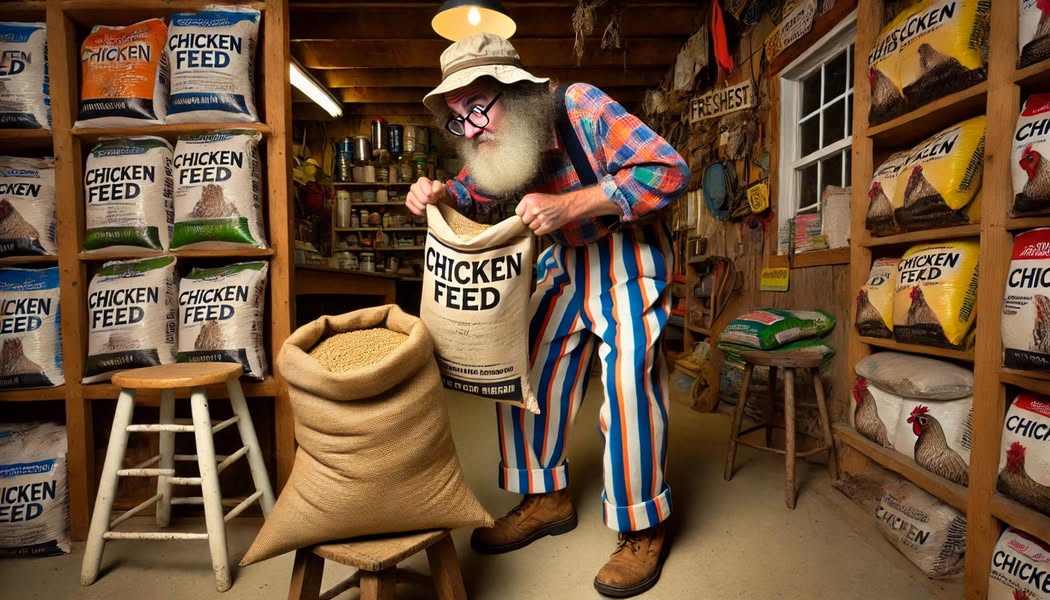
Another time, I watched as a jittery man in a plaid shirt and tight hat walked into the feed store, clipboard in hand. He approached the counter with the seriousness of a detective.
"I need to inspect the feed," he announced.
Harry blinked. "Inspect it?"
The man nodded, grabbing a bag of chicken feed and shaking it like he was testing a fine wine. "I can tell by the sound if it’s fresh," he said, tapping and listening closely.
Greg, watching with amusement, asked, "You’re telling me you can tell if feed’s fresh just by shaking the bag?"
The inspector nodded, dead serious. "It’s an old trick."
After a few more shakes and nods of approval, the man picked out a few bags and walked to the counter. "I’ll take these. They’re fresh."
Greg grinned. "What was wrong with the others?"
The inspector whispered, “They didn’t sound right.”
He left, and Harry and Greg laughed. "Guess you can’t argue with that kind of expertise!"
Back to my journey at the hobby farm, my own mistakes and lack of knowledge turned into humorous anecdotes, and my successes were celebrated as small victories. Over time, I not only built a functioning mini-homestead but also gained confidence, learning that my dream of rural life, while challenging, was worth every misstep.
By the end of the first growing season, I reflected on how much I had learned—not just about hobby farming, but about resilience and community. My interactions with Harry, Greg, and Maeghan were central to my journey, transforming H&I Country Supply from a mere store into a cornerstone of our new life.

Leave a Reply