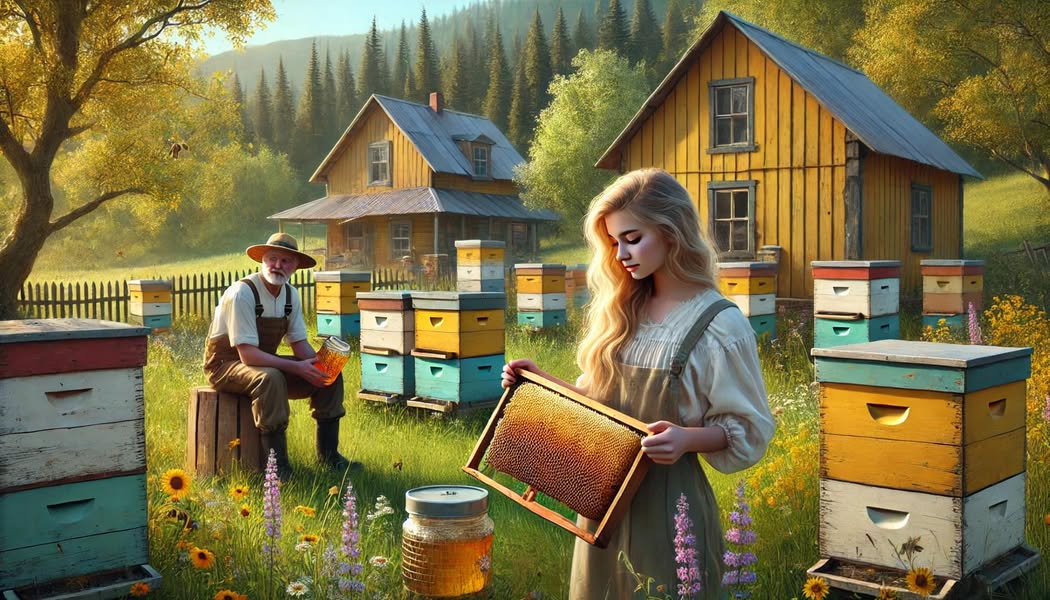
This story is dedicated to our teacher daughter, who is the bee’s knees, and collaborated in its writing.
Part I: Winter Preparation
The dark gray clouds of late November raced past the window of Betty Matheson’s Ottawa apartment as she packed up her classroom materials. A Grade 5 teacher, she had just finished preparing her final lesson on ecosystems, capping it off with her favorite subject: bees. The unit had become a tradition for Betty, a way to share her family’s beekeeping legacy with her students.
This year Betty taught a class of 21 students, more than half of whom required adaptations to meet their specific needs. A quarter of her students depended on assistive technology for most aspects of learning. This was in addition to a classroom hearing assistance system, specialized seating for students with physical disabilities, and regular use of a laptop cart to support their educational activities.
In her mind, she likened them to plants. Each one was different, special, and unique—needing various things to grow and thrive. Some required more or less water or sunshine, some grew faster or slower, and others needed extra attention to bloom.
Betty’s father, Robert Matheson, had always said that bees taught life’s most important lessons. For decades, his hives outside Vernon had been a source of honey and wisdom, fostering resilience, discipline, and an appreciation for nature’s delicate balance.
Betty carried those lessons into her teaching, showing her students how bees pollinate plants, maintain intricate social systems, and survive harsh conditions. She even brought in a honeycomb frame for her students to examine and taste fresh honey, which never failed to spark wide-eyed amazement.
Her classroom buzzed with energy when the bee unit started each year. She told her students that they were all a hive, each with a role to play, and that her job as the queen bee was to look after their interests and help them grow. In turn, they needed to do their jobs to ensure the hive thrived.
To bring the hive concept to life, Betty organized activities like creating mini hive models from craft supplies and writing “bee journals” from a worker bee’s perspective. She explained how each bee’s role—worker, drone, or queen—was essential to the hive’s survival. She even arranged a field trip to her father’s apiary, where students donned protective gear and watched as he opened a hive to reveal the organized chaos within.
Despite the joy she found in teaching, Betty couldn’t shake the worry growing with every phone call home. Her father’s updates on the apiary painted a grim picture: a poor honey yield, weaker colonies, and his own health faltering under the strain of keeping the business afloat.
Winter preparation, a critical time for southeastern Ontario beekeepers, stretched from late August through early November. After the honey harvest, the hives needed meticulous care. Entrances were narrowed to keep out mice, insulating wraps applied to protect against the bitter cold, and colonies ensured sufficient honey stores—up to 100 pounds per hive—to survive the winter. Treatments for varroa mites and other pests were also vital. Without these preparations, the bees wouldn’t make it.
Betty’s childhood memories of the apiary flooded back as she considered her next steps. She remembered walking through rows of hives with her father, the air thick with the hum of activity. He had once called her his “queen bee,” a nickname her students now used that always made her giggle.
The calendar on her desk reminded her that winter break was just weeks away. This year, she decided to head home early—not just to visit but to help. It wasn’t just her father who needed her; the bees did too.
Although she lived only 35–40 minutes away, the demands of teaching often kept her from returning to Vernon. When she did, it always felt like stepping into another life.
The farmhouse stood steadfast against the wind, its yellow siding weathered but resilient. Her father waited on the porch, bundled in his old coat, his face etched with weariness. Inside, they settled at the kitchen table with steaming mugs of tea—sweetened with honey, of course.
Her father’s words tumbled out: frustration over the poor season, the endless tasks to prepare the hives, and the aches that slowed him down.
“We’ll get through this,” Betty said firmly. “Let’s focus on what needs to be done now.”
Over the next week, Betty threw herself into the work. The unusually mild fall weather helped. Together, they inspected the hives, cleared debris, and ensured the bees had enough food. Betty wrapped the hives in insulated covers while her father supervised from a nearby bench, offering advice when needed.
Despite the hard labor, Betty felt a deep connection to the land and the rhythms of rural life. The earthy scent of freshly tilled fields, the lingering aroma of beeswax, and the steady hum of the hives brought a peace she hadn’t realized she was missing.
One frosty morning, as Betty placed the final wrap on the last hive, her father spoke softly behind her. “You’ve got a knack for this, you know. Maybe it’s time to think about coming home for good.”
Betty didn’t answer right away. She looked over the rows of hives, their inhabitants tucked away, waiting for spring. The bees had taught her many lessons, but now they posed a question she hadn’t anticipated.
Part II: The Promise of Spring
The days of December passed quickly, a blur of cold mornings and frosty evenings. Betty’s days were full, balancing her teaching duties with weekend trips to Vernon to help her father. She dove into beekeeping literature during her spare moments, searching for ways to strengthen the apiary. Her father called these efforts “textbook optimism,” but Betty knew the old farmer appreciated her determination.
One morning, Betty arrived at the farmhouse to find her father poring over a notebook filled with scribbled dates and numbers.
“Dad, what’s all this?” she asked.
“Winter losses,” he muttered. “If we lose more than 30% of the colonies, it might not be worth it next year.”
Betty stared at the numbers, a knot forming in her stomach. She could see the lines on her father’s face deepen with worry. But then an idea sparked.
“Have you ever considered diversifying?” she asked.
Robert looked up, raising an eyebrow. “What do you mean? We already sell honey and beeswax candles.”
“Maybe we expand into agri-tourism,” Betty suggested. “Host workshops, apiary tours, or even beekeeping classes. People are fascinated by bees—they’d pay to learn from you.”
Her father chuckled. “I’m not much of a teacher, Betty. That’s your gift.”
“Then let me help,” she replied.
Spring Comes to Vernon
The long-awaited thaw of spring brought life back to the farm. As the snow melted, the bees began their cautious flights outside the hives, searching for the first signs of blooming flowers. Betty’s weekends in Vernon stretched into full weeks as the school year ended.
True to her word, Betty began marketing her father’s apiary as a destination for eco-conscious visitors. She created a small website, shared photos of the apiary on social media, and even designed a pamphlet that she handed out at the local farmer’s market.
To her surprise, interest grew quickly. Families booked tours to see the hives, budding beekeepers signed up for workshops, and her father’s honey began to sell online. One afternoon, Robert sat on the porch with a cup of tea, marveling at the buzz of activity—not just from the bees but from the visitors.
“I don’t know how you did it, Betty,” he said, shaking his head. “This is more than I ever imagined.”
“It’s teamwork, Dad,” she replied with a grin. “Just like the hive.”
A Hive of Their Own
As the summer progressed, Betty felt her connection to the farm deepen. The rhythms of beekeeping, from monitoring hives to harvesting honey, brought her a sense of fulfillment she hadn’t felt in years. She began to imagine a future where she could teach and manage the apiary simultaneously.
One evening, as the sun dipped below the horizon, casting a golden glow over the fields, Robert handed her a small wooden box.
“What’s this?” she asked, puzzled.
“Open it,” he said.
Inside was a beekeeping tool kit, engraved with her initials. Tears welled up in Betty’s eyes as she looked at her father.
“You’re the queen bee now,” he said with a smile.
Epilogue: The Beekeeper’s Legacy
Years later, Betty stood in her classroom, now adorned with photos of her family’s apiary. Her students buzzed with excitement as they prepared for their annual field trip to Vernon.
At the farm, her father greeted the students with his signature warmth, guiding them through the rows of hives. Betty watched from a distance, proud of how their small apiary had grown into a community hub.
As the students marveled at the bees, Betty reflected on the lessons her father had taught her: resilience, teamwork, and the power of nurturing both people and nature.
“Just like a hive,” she whispered to herself, smiling.
(In Ontario, approximately 17% of students are identified as having special education needs. This includes students who require specific accommodations, modifications, or specialized programs due to physical, cognitive, behavioral, or communicative challenges. Global News)


Leave a Reply