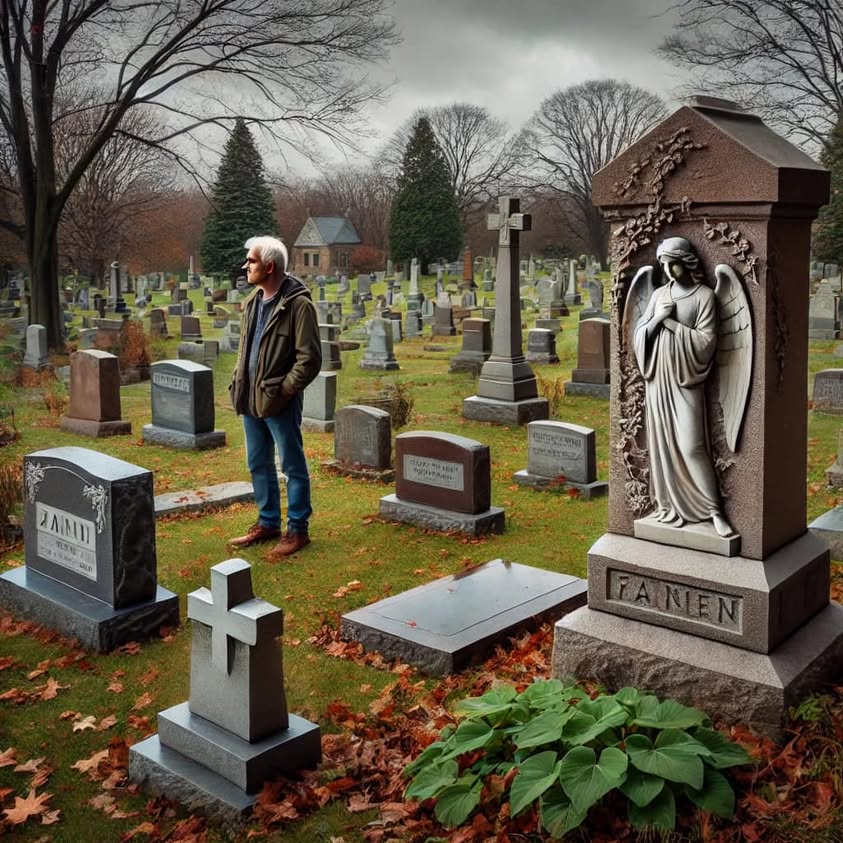
Ted’s mother had recently passed away after being killed in a hit-and-run accident. The police had never caught the driver. He visited her gravesite regularly and his journey from the parking lot to her headstone took him past many others.
He never thought he would find solace among the dead, but everything changed after he picked up Harvey Medland’s Tombstone Tales from Ontario Cemeteries. The book awakened in him a deep fascination with cemeteries—not just as places of rest, but as storied landscapes where history, tragedy, and love intertwined.
Ted became a taphophile, a term he now wore with quiet pride, preferring it to "cemetery enthusiast." He dedicated his weekends to exploring as many of the 108 cemeteries scattered within a 40-kilometer radius of his Kemptville home as possible.
What drew Ted most were the graves of families shattered by drunk driving accidents. The stories of these lives cut short haunted him, and he often felt the victims cried out for justice in a legal system that seemed to forget them.
Ted started his journey at the Old Methodist Cemetery, Kemptville’s oldest burial ground. Among the cemetery’s weathered sandstone gravestones, one stood out—a tall, rectangular marker with ivy vines etched into its sides, symbolizing eternity. It was one of the last sandstone type gravestones used in that year and marked the grave of the Millers, a young family of four. A drunk driver, on what was now known as County Road 43, had collided with their horse drawn cart on the gravel road late one snowy night in 1910.
Their epitaph read:�"Together in life, together in eternity. May justice find its way to those who wronged them."
The sandstone’s surface was deeply weathered, the inscriptions softened by time and acid rain, yet their story remained piercingly clear. Ted lingered there, imagining the horror of that night and the heartbreak of the relatives left behind. He had read that the driver, intoxicated beyond reason, had received a sentence of just two years. It was a bitter pill for the community to swallow, and Ted felt the weight of their grief pressing down on him.
At Holy Cross Cemetery, Ted found another tragic tale. Emily Benoit, just 17, had been struck by a drunk driver while walking home from a friend’s house in 2006. Her grave was marked by a polished black granite headstone, its glossy surface gleaming in the sunlight. Atop the stone, an angel carved in low relief seemed to reach skyward, as if offering Emily’s spirit to heaven.
Her epitaph on a brass plaque affixed to the headstone read:�"Forever young, forever loved. A victim of carelessness, a voice for change."
Emily’s parents had fought tirelessly for stricter sentencing laws in Ontario. They succeeded in raising awareness, but the driver, a first-time offender, had spent only a year behind bars. Ted often wondered what Emily’s life could have been if fate—and that driver—had been kinder.
Ted’s visits also brought him to forgotten corners like the North Rideau Methodist Cemetery, now abandoned. Here, among crumbling headstones softened by lichen, he discovered a small marker for Matthew Connors, a trucker who died in 1977. His grave was marked by a modest white marble headstone, with an engraving of a horse-drawn wagon, a nod to his family’s farming roots.
The inscription read simply:�"Gone too soon, but never forgotten."
Ted knelt by the grave, imagining the life of a hardworking man cut short by another’s recklessness.
Ted’s dual fascination with the artistic beauty of gravestones and the tragedies etched into them led him to advocate for victims of drunk driving. He began photographing these graves and sharing their stories online, hoping to bring renewed attention to the issue.
Through his posts, he connected with victims’ families, lawmakers, and activists. They shared their grief and anger at the inconsistencies in the justice system. Ted also collaborated with local historians, delving into records at the Kemptville Public Library and uncovering untold stories.
One day, while visiting Union Cemetery in Merrickville, Ted met Sarah, a mother whose son, Alex, had died in 2015 after being struck by a drunk driver. His grave was marked by a sleek, dark green granite stone, shaped like an open book. On one side, a relief of a maple tree symbolized growth and life, now cruelly cut short.
The inscription read:�"A bright star dimmed, a future stolen."
Sarah was working to fund scholarships in Alex’s name, and Ted joined her efforts. Together, they organized a candlelight vigil at the cemetery, bringing together families who had suffered similar losses.
Ted’s passion became more than a hobby—it was a mission. He realized cemeteries weren’t just places for mourning; they were spaces for reflection, learning, and action. Each grave told a story, and many of those stories cried out for change in a broken legal system.
As Ted stood in St. Paul’s Anglican Church Cemetery, surrounded by ancient stones carved from local limestone, their surfaces intricately decorated with floral motifs and hourglasses symbolizing mortality, he thought of Harvey Medland’s words:
"Cemeteries are not places of death, but libraries of lives lived."
With every step, Ted resolved to ensure those lives were not forgotten, and that their stories—of tragedy and resilience—would continue to inspire change.
The graves might have been silent, but Ted knew their message would echo for generations.
(In Ontario over the last decade, the average sentence for impaired drivers who caused a death has typically ranged from 5 to 10 years in prison, depending on factors such as the severity of the offense, the driver’s prior record, and the circumstances of the incident. If you drink, don’t drive!)
Continue with To Bury or Not to Bury: That is the Question.
Leave a Reply