Originally posted on Facebook on October 12, 2024.
For the first few years, our pond was nothing short of a paradise. The water was clear, reflecting the deep greens of the surrounding trees and the blue sky above. It was a tranquil oasis, and we were proud of the little ecosystem we had created.
This wasn’t just any pond—this was our pond, fed by the very essence of nature: snow melt, rain that directly fell or was channeled from our eavestroughs and the gurgling contributions of our trusty sump pump. It was a serene kidney-shaped oasis, forty feet long, twenty feet wide, and twelve to fifteen feet deep. The perfect spot for a bit of reflection—or at least, it would have been, if it weren’t for one small problem: algae and its sinister cousin, milfoil.
It started slowly, almost imperceptibly—a slight greening of the water. At first, it was just a hint of algae, nothing to worry about, or so I thought. But soon, that slight green tint began to spread, creeping across the surface of the pond like an unwelcome guest overstaying their welcome.
Determined not to let this minor inconvenience ruin our pond, I sprang into action. First up was the pond dye—a deep, dark blue that I hoped would curtail the sunlight feeding the algae. And for a while, it seemed to work. The algae growth slowed, and I breathed a sigh of relief. But nature is nothing if not persistent.
As the battle dragged on, I tried everything I could think of. I even introduced barley straw to the pond, a method touted for its supposed ability to restrain algae growth. For a year or so, I dutifully tossed in the straw, hoping it would work its magic. But alas, the algae simply laughed in the face of my efforts, continuing to flourish despite my best intentions.
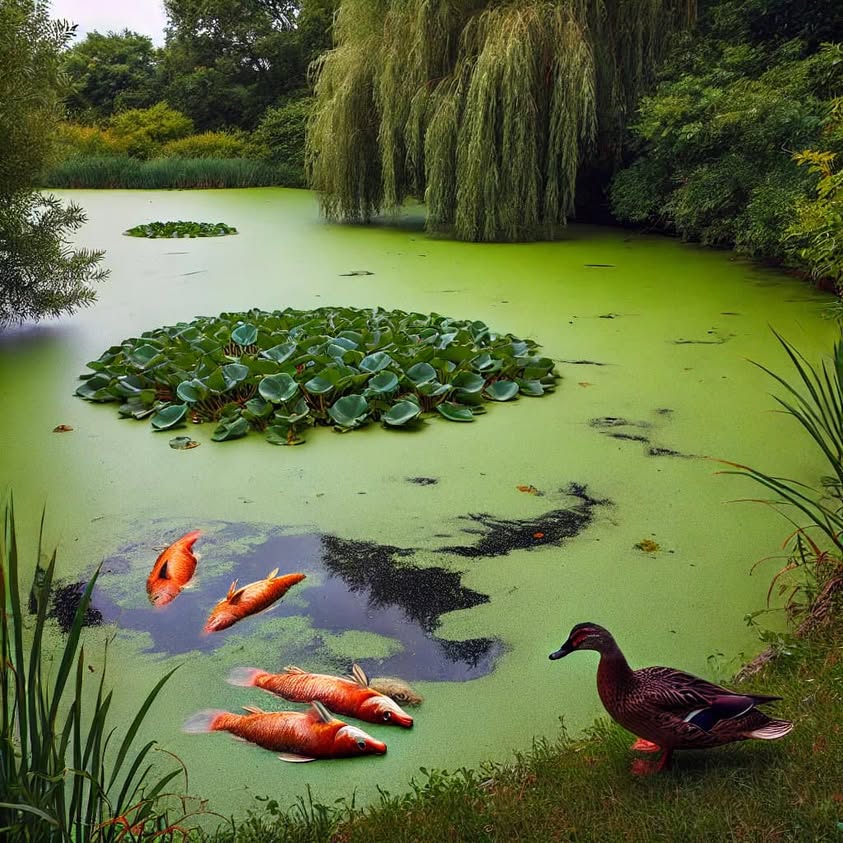
Then disaster struck. By the third year, the algae had grown so rampant that when winter arrived, it consumed all the oxygen in the pond. We remember the heartbreak of discovering that our beloved Koi, which had been such a beautiful part of the pond, had perished beneath the ice, victims of the oxygen-starved water. It was a harsh and painful reminder of how quickly things could spiral out of control and how delicate the balance of life in the pond truly was.
Soon, the algae adapted even more, finding ways to thrive even in the dimmed waters. So, I called in reinforcements—the Muscovy ducks. These birds were supposed to be the answer to my prayers, natural algae eaters who would munch their way through the problem. For a few years, they paddled around, nibbling here and there, but their appetites were no match for the sheer volume of algae. It was like sending a few mice to deal with a field of crops.
Undeterred, I turned to brute force. Armed with a metal rake, I attacked the algae head-on. The rake would emerge from the water, heavy with clumps of slimy green goo, but for every bit I managed to scrape out, it felt like two more bits sprouted in its place. My efforts had some effect—the algae was kept somewhat at bay—but it was far from defeated.
And then, as if the algae wasn’t enough, the milfoil arrived. This invasive aquatic plant, with its delicate, feathery leaves, quickly took root and began to spread. At first, it seemed almost pretty, swaying gently in the water. But soon, it became clear that this was no benign plant. The milfoil spread like wildfire, choking out other life in the pond, forming dense mats that made even the algae look like a minor nuisance.
The milfoil made everything worse. It thrived in the nutrient-rich environment created by the decaying leaves from the weeping willows, small oaks, and giant maples, turning the pond into a tangled mess of vegetation. My efforts with the pond dye, the barley straw, the ducks, and the rake suddenly seemed laughable in the face of this new menace.
The once-clear water of our pond was now a battleground. The algae and milfoil fought for dominance, each taking turns in their relentless assault on our little oasis. The pond that had once been a place of peace and reflection was now a source of frustration and endless work.
But despite the setbacks, I refused to give up. I kept scraping, kept dyeing, and kept learning about my ever-changing pond. And though the water may never be as clear as it once was, the struggle has become part of its story—a testament to my determination and the endless dance between nature and human effort.
Despite all my efforts, the battle with the algae and milfoil seems never-ending. As I stand by the pond, watching the relentless growth of these unwelcome invaders, I realize that more drastic measures are needed.
The only real solutions left are twofold: first, we will need to bring in an excavator to remove the accumulated algae, milfoil, and rotting detritus from the edges and bottom of the pond. This will be no small task, but it seems the only way to truly start fresh.
Second, we need to invest in a pond aerator—one that can send vital oxygen bubbles to the surface at each bulge of the kidney-shaped pond, helping to keep the water healthy and balanced. It won’t be easy, and it won’t be cheap, but we know that these steps are necessary if we want to restore our pond to its former glory. And so, the next chapter of our pond saga begins soon with the hope that one day, we will once again enjoy the clear, peaceful waters we’d once known.
Leave a Reply