Originally posted on Facebook on September 28, 2024.
In the quiet village of South Mountain, where summer lingered in the fields and winters curled through the valleys, an old scarecrow stood sentinel over the crops on Farmer Mellon’s land.
Each spring, as the frost gave way to fresh grass and wildflowers, the scarecrow would stir back to life. Nobody in the village questioned the magic that brought him to life year after year—it was simply how things were, like the steady rhythm of the seasons.
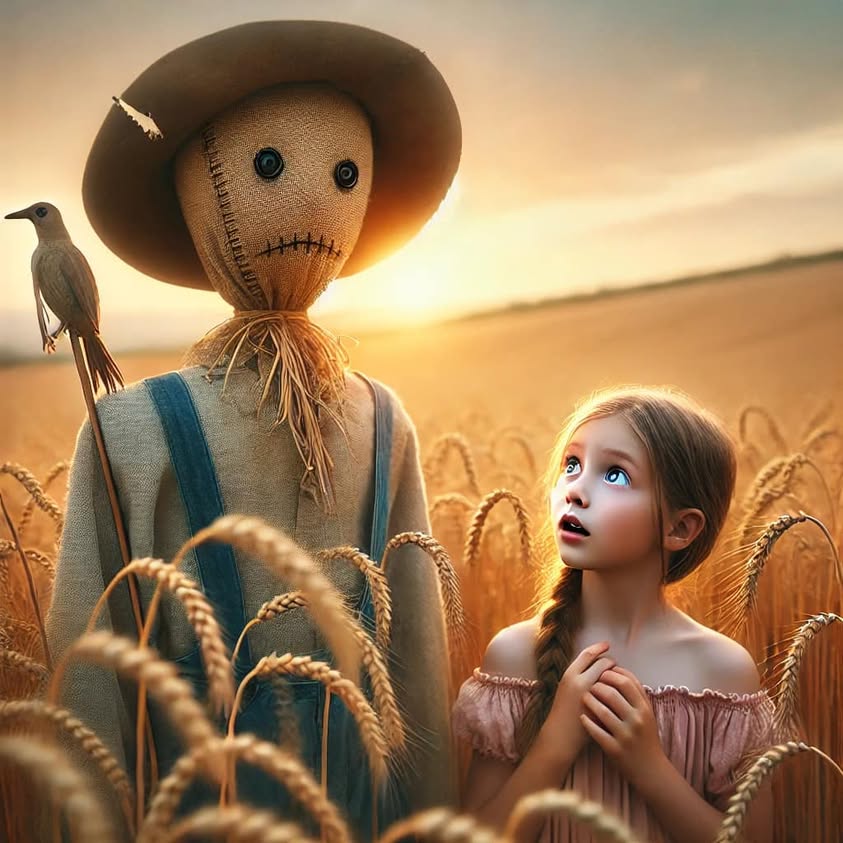
The scarecrow was called Barley, tall and wiry, with a face stitched together from faded cloth and mismatched buttons for eyes. His straw-filled limbs were dressed in an old coat that flapped in the wind, and he stood with a slight lean, as though always ready to lend a hand. But it wasn’t his tattered appearance that made him special—it was the care he brought to the land.
Every summer, Barley helped tend the fields. He whispered to the corn, teased the beans to climb higher, and made the wheat grow strong and golden under the sun. The farmers of South Mountain knew their crops thrived with his help, though few spoke of it openly. They left food by the fence post and murmured quiet thanks as they passed him.
Maisie Mellon had spent her life on this farm, working beside her father, but those days were changing. Once, they had been dairy farmers, and the cows had roamed freely in the pasture. But that was years ago now. Her father had been forced to sell the herd, along with the milk license, to pay off mounting debts. It had been a tough decision, but it had saved the farm—though it was a different farm now. Instead of cows, they grew cash crops like corn, soybeans, and wheat.
The memory of the cows, and the rhythm of tending to them, still haunted Maisie. The farm felt emptier without them. She had loved the way the cows wandered the fields and how milking had been an everyday ritual. Now, farming felt more like an endless grind, and with the soil wearing thin, things hadn’t been going well. She wasn’t sure if she wanted to carry the burden of the farm when her father couldn’t do it anymore.
One afternoon, sitting near Barley, Maisie voiced the doubts that had been stirring inside her for months.
“Maybe it’s time to let this place go,” she muttered, more to herself than anyone else. “I don’t know if I want this anymore.”
“You don’t have to decide right now,” a voice said, startling her.
Maisie turned and saw Barley, the scarecrow, stretching his straw arms as if waking from a long nap. She blinked, wondering if she was dreaming.
“Barley?” she asked in disbelief.
He gave her a crooked smile. “I’m as real as the wind in the trees,” he said, stepping down from his post.
Maisie stared at him, not sure what to say. “You’ve been watching me all these years?”
“Of course. I’ve been watching you grow up, same as the crops,” he said kindly. “Now tell me, why are you so troubled?”
Maisie hesitated, but then it all spilled out—the struggle to keep the farm going, the weight of her father’s expectations, the worry that she wasn’t cut out for this life.
“We don’t have cows anymore,” she said. “And the crops aren’t doing well. It’s just… hard. I don’t know if I want to take it on.”
Barley nodded, listening carefully. “Farming isn’t easy. But it’s not just about what’s gone or what’s hard. It’s about what’s still here, what can grow again.”
“But how? The land is tired. I’m tired.”
“The land can rest, too. It just needs someone to care for it,” Barley said. “Maybe it’s not about trying to do it all at once. Sometimes the farm speaks, and you just have to listen.”
Over the following weeks, as summer began to wane, Barley helped Maisie with the fields. Together, they repaired what was broken—fixing the irrigation system, tending to the fences, and caring for the soil.
Barley knew things about the earth that no one else did, and he showed Maisie how to nurture the land in a way that went beyond the practical knowledge her father had passed down. It was as if Barley and the farm were speaking to each other.
As they worked side by side, Maisie’s perspective shifted. The farm wasn’t just endless labor; it was alive. She found herself remembering why she had loved it in the first place—the rhythm of planting, the satisfaction of watching the crops grow, the way the land seemed to breathe with the seasons. Even without the cows, the connection she had to this place was undeniable.
One crisp evening, as autumn began to paint the horizon in shades of amber, Maisie stood with Barley, looking over the fields. The corn was tall, and the wheat was fully headed. Despite everything, the harvest would be good.
“Thank you, Barley,” Maisie said quietly. “I think I had forgotten what this place meant to me.”
Barley smiled, his button eyes crinkling. “This farm is a part of you, Maisie. The cows were just one chapter. The land? That’s your story.”
Maisie nodded, feeling a sense of clarity. “I want to stay. I want to keep the farm going—even after Dad can’t anymore.”
Barley’s smile widened. “You’ve got a farmer’s heart. The land knows it.”
As the first frost crept over South Mountain that night, Barley returned to his post in the field. Maisie stood for a moment, looking out at the quiet fields, filled with the promise of a new beginning. She knew the road ahead would be hard, but she also knew she wasn’t ready to give up. The farm had given her family a second chance once before, and now it was giving her one, too.
When spring returned, Maisie would be ready to plant again, with a new sense of purpose. And somewhere in those fields, Barley, the ever-watchful scarecrow, would be waiting for the sun to rise again.
Leave a Reply